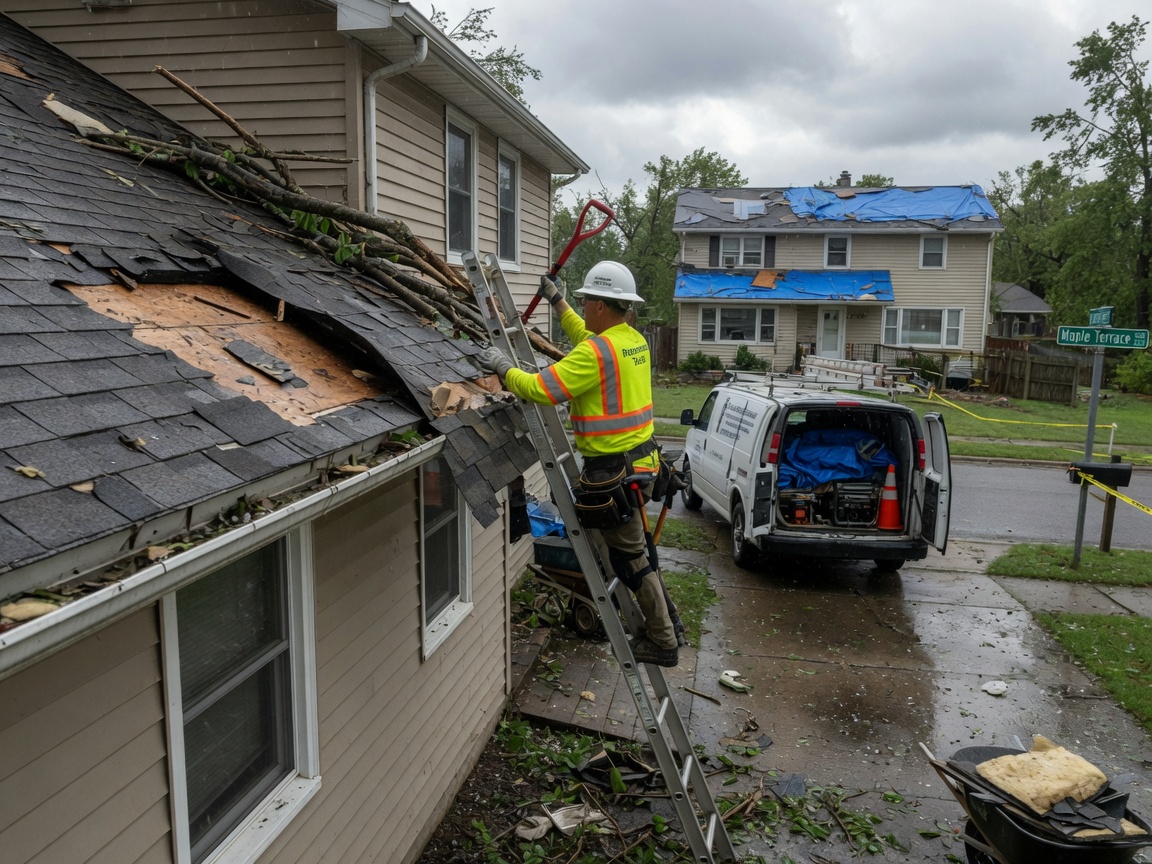
Storm Damage Restoration In Riverton
Storm damage in Riverton is rarely just one problem. A wind-driven rain event can tear shingles, force water behind siding, soak attic insulation, and leave debris spread across the yard in one night. In Salt Lake County, the semi-arid climate means materials bake in summer heat and then tighten up again in winter cold, so flashing, sealants, and older roofing components often fail at their weak points once a storm hits. We respond by stopping the active intrusion first, then tracing moisture paths beyond the obvious stain or puddle. That matters because water often travels along rafters, top plates, and wall cavities before it finally shows itself inside.
What A Proper Storm Damage Scope Should Cover
A real storm damage restoration scope should separate emergency stabilization from full repair planning. The first priority is making the structure safer and limiting additional damage: tarping exposed roof sections, boarding broken openings, removing hazardous debris, and extracting standing water before swelling, delamination, and microbial growth accelerate. After that, the inspection has to get more technical. We check roof penetrations, drip edges, valley areas, soffits, window perimeters, insulation compression, and moisture readings in adjacent assemblies. If a breaker trip, scorched wiring, or appliance damage suggests an electrical event during the storm, we can also flag areas where smoke damage restoration or smoke damage cleanup may be needed alongside the water and structural work.
Storm Damage Restoration Near You — Choose Your City
Every city below has its own local Storm Damage Restoration page with coverage details.
Salt Lake County
Utah County
Davis County
Weber County
Utah
Davis
Washington County
Salt Lake
Cache County
Tooele
Iron County
Riverton-Specific Conditions We Watch For
Homes around Riverton Meadows, Western Springs, and Harvest Park do not all fail the same way in a storm. Some take the brunt at fence lines and outbuildings; others develop leaks where wind pushes rain uphill under roofing details or around chimney and vent flashing. Near landmarks like Riverton City Park and the Old Dome Meeting Hall, we often see homeowners focus on visible shingle loss while missing the less obvious damage inside attic insulation or behind exterior trim. Cold winter conditions can also turn a small storm breach into a larger interior issue if wet materials freeze, expand, and split. That is why we document both immediate storm effects and the secondary damage that tends to follow in the next few days.
Practical Guidance After A Storm
After a storm, avoid climbing onto the roof or running fans blindly into closed cavities without knowing where the water traveled. Wet insulation left in place can trap moisture against framing, and temporary fixes done in the wrong sequence can hide damage that later leads to staining, odor, or material breakdown. We prefer a controlled approach: stabilize, inspect, document, dry to target levels, then rebuild only after damaged components are clearly identified. If the storm involved lightning, a power surge, or a small fire event, it is important to separate ordinary water damage from soot spread and corrosive residue, because smoke damage cleanup follows different cleaning rules than standard storm drying. We are available Mon–Sun, 5am–11pm for Riverton storm calls.
Storm Damage Restoration Services We Offer
✓Emergency Roof Tarping
Temporary roof covering to slow or stop active leaks after wind or impact damage. This buys time for a proper repair plan while protecting insulation, ceilings, and contents.
✓Water Extraction and Structural Drying
Removal of standing water followed by controlled drying of framing, subfloors, drywall, and insulation areas affected by storm intrusion. The goal is to reduce hidden moisture before materials swell, rot, or develop odor.
✓Board-Up and Opening Protection
Securing broken windows, damaged doors, and other exposed openings after wind or flying debris. Proper closure helps prevent theft, weather exposure, and further interior damage.
✓Debris Removal and Site Cleanup
Clearing branches, blown materials, and storm-related debris so access is safer and damage can be inspected accurately. Cleanup also helps prevent punctures, blocked drains, and trip hazards.
✓Ceiling Leak and Attic Damage Restoration
Targeted restoration for storm-related ceiling stains, wet insulation, and attic moisture migration. We trace the leak path instead of only patching the visible interior symptom.
✓Storm-Related Smoke Damage Cleanup
Cleaning and assessment when lightning, electrical faults, or storm-triggered fire incidents leave soot or smoke odor behind. This service addresses residues that standard water cleanup does not remove.
Storm Damage Restoration Cost in Utah
| Service | Typical Range | What Affects It |
|---|---|---|
| Emergency Storm Damage Inspection | $150–$350 | Depends on after-hours timing, property size, and whether attic, roof, and multiple moisture zones need review. |
| Roof Tarping | $300–$1,200 | Price moves with roof pitch, tarp size, access difficulty, and how much wind damage must be covered. |
| Board-Up Service | $250–$900 | Affected by number of openings, material size, and whether framing around the opening is damaged. |
| Water Extraction And Drying | $1,000–$4,500 | Driven by how many rooms were affected, insulation saturation, equipment time, and hidden moisture in walls or subfloors. |
| Debris Removal And Site Cleanup | $200–$1,500 | Depends on volume, weight, safe access, and whether disposal includes damaged building materials. |
| Storm-Related Smoke Damage Cleanup | $500–$3,000 | Varies with how far soot spread, surface types involved, and whether odor treatment is needed. |
Ranges are typical for Utah and confirmed with an exact written quote before any work starts.
How it works
- 1
Stabilize The Property
We start with urgent protection measures such as tarping, board-up, hazard isolation, and water control to limit additional damage.
- 2
Inspect And Document Damage
Next we assess roof, exterior, attic, interior finishes, and moisture spread so the scope reflects both obvious and hidden storm effects.
- 3
Remove Water, Debris, And Damaged Materials
Standing water, unsafe debris, and non-salvageable materials are removed in a controlled sequence to improve safety and speed drying.
- 4
Dry, Clean, And Treat Affected Areas
Structural materials are dried to appropriate levels, affected surfaces are cleaned, and any storm-related smoke residue is addressed where needed.
- 5
Repair And Restore
Once the structure is dry and the scope is clear, we complete the needed restoration work so the home is secure, functional, and presentable again.
Pricing
Storm damage restoration costs vary widely based on roof exposure, how long water entered, material types affected, and whether the loss includes debris, structural drying, or storm-related smoke cleanup. Small stabilization jobs may stay in the low hundreds, while multi-room water intrusion and repair work can reach several thousand.