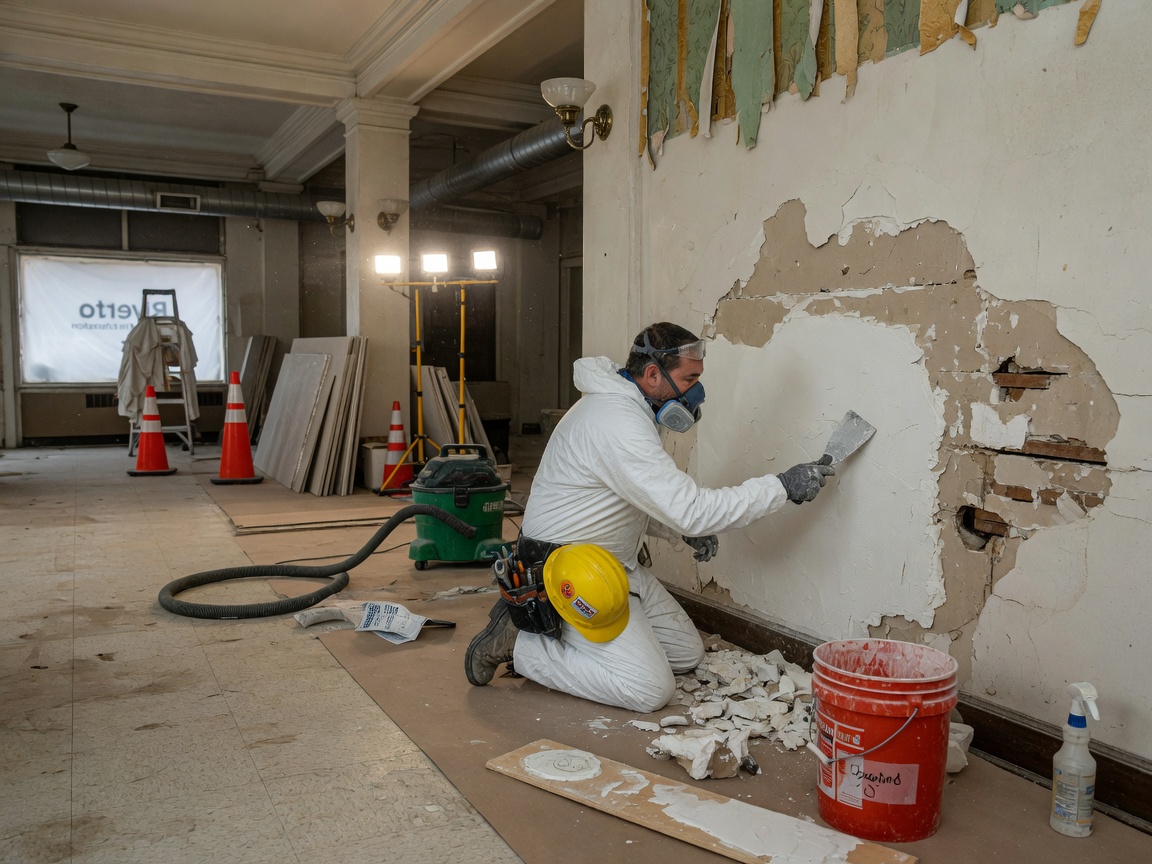
In Syracuse, commercial restoration often means working in a fast-growing Davis County setting where newer retail, office, and mixed-use spaces sit between busy routes like I-15 and UT-193 and open exposure toward the Great Salt Lake. Smoke and fire damage here can spread through large HVAC runs, suspended ceilings, and shared wall cavities, while winter cold can complicate drying and odor removal after firefighting water is used indoors. During the hottest part of the year, heat loading in roof areas, attic-like plenums, and storefront façades can make soot odors linger and push restoration crews to focus on ventilation control as much as surface cleanup. Properties near Syracuse City Park corridors and west-facing areas with Antelope Island views also tend to deal with wind-driven dust, which can mix with smoke residue and make post-fire cleaning more detailed than a standard interior wipe-down.
Commercial Restoration in Syracuse — What We Handle
- ✓Fast access from I-15 and UT-193 helps with scheduling around active storefronts, offices, and service properties.
- ✓Syracuse’s cold winters and hot summers change how moisture removal, odor control, and indoor containment need to be managed.
- ✓Open exposure near the Great Salt Lake can add dust to smoke residue, so cleanup often takes more detailed filtration and surface work.
Commercial Restoration Services We Offer in Syracuse
✓Commercial Smoke Damage Cleanup
Targeted cleanup for offices, retail spaces, warehouses, and mixed-use buildings where soot has spread well beyond the room of origin. The work focuses on residue removal from surfaces, hidden ledges, fixtures, and mechanical areas that keep releasing odor.
✓Soot Removal From Walls, Ceilings, and Hard Surfaces
Different smoke residues require different cleaning methods, and the wrong approach can smear or permanently stain finishes. We clean painted drywall, metal, masonry, tile, glass, and other hard surfaces with methods matched to the material and residue type.
✓Commercial Odor Removal and Deodorization
Persistent smoke odor usually means particles remain in the building envelope, HVAC path, or porous materials. This service addresses the source of odor with filtration, removal of unsalvageable materials, and deodorization steps suited to commercial interiors.
✓HVAC Smoke Contamination Cleaning Coordination
Smoke in rooftop units, ducts, returns, and ceiling plenums can keep recirculating through the property after surface cleaning. We identify likely contamination points and coordinate the restoration scope so odor is not pushed back into occupied spaces.
✓Debris Removal and Selective Demolition
Not every fire loss needs a full gut job. Selective demolition removes unsalvageable drywall, insulation, ceiling tile, flooring, and damaged fixtures while preserving sound materials that can be cleaned and kept.
✓Contents Cleaning for Business Equipment and Furnishings
Desks, shelving, non-sensitive equipment exteriors, inventory areas, and fixtures often need separate handling from the building shell. We sort items by salvageability and clean what can be restored without spreading residue through the property.
Commercial restoration after a fire is different from a small residential cleanup because smoke travels through larger air volumes, shared walls, ceiling plenums, rooftop HVAC runs, storage areas, and tenant-adjacent spaces. In offices, retail suites, warehouses, churches, and light industrial buildings around Riverton, the first priority is separating what can be cleaned from what has absorbed odor too deeply to be saved. Dry soot behaves differently than oily smoke, and both can permanently stain acoustic ceiling tile, unfinished wood, paper records, textiles, and porous insulation. A proper smoke damage restoration plan starts with source identification, containment, and residue testing so the cleanup method matches the material instead of grinding contamination deeper into finishes.
In commercial buildings across Salt Lake County, smoke damage cleanup usually involves more than wiping visible residue off walls. Fine particles collect above ceiling grids, inside electrical covers, in copier vents, on warehouse racking, and in HVAC components that can keep redistributing odor after the visible mess looks gone. In Riverton’s semi-arid climate, residues can sit dry on surfaces for a while, but once winter cold drives buildings closed up, trapped odor becomes more noticeable and can spread through return air systems. For that reason, commercial restoration often includes HEPA vacuuming, controlled demolition of unsalvageable porous materials, detailed cleaning of hard surfaces, filtration, and a deodorization strategy built around the actual smoke type rather than a masking fragrance.
How It Works in Syracuse
- 1
Site Walkthrough And Damage Mapping
We inspect the source area, smoke travel paths, ceiling spaces, HVAC impact, and the mix of porous and non-porous materials. The goal is a practical restoration scope that separates salvageable areas from materials that should be removed.
- 2
Stabilization, Containment, And Safety Setup
Affected zones are isolated to limit cross-contamination during smoke damage cleanup. We set up filtration as needed, protect less-affected areas, and create debris and access routes that make sense for a working commercial property.
- 3
Residue Removal And Selective Demolition
Dry soot, oily smoke, and char-related residue are cleaned with methods matched to the surface. Unsalvageable materials such as odor-loaded insulation, ceiling tile, or damaged drywall are removed so deodorization is not wasted on materials that will keep off-gassing.
- 4
Deodorization And Detail Cleaning
Once contamination is physically removed, we address remaining odor in the structure and affected contents. This stage may include detailed cleaning above ceilings, inside fixture cavities, and around mechanical components where smoke particles commonly settle.
- 5
Final Review And Next-Step Planning
We walk the site with the owner or manager, review what was cleaned versus removed, and outline any remaining reconstruction items. Our service hours are Mon–Sun 5am–11pm, which helps with early access, off-hours work, and coordinated reopen planning.
Serving All of Syracuse
We regularly handle commercial restoration jobs near:
- 📍Syracuse City Park
- 📍Antelope Island Viewpoints
- 📍Syracuse Village
- 📍Antelope
Commercial Restoration Pricing in Syracuse
Commercial restoration pricing depends heavily on square footage, smoke type, ceiling height, HVAC involvement, how much porous material must be removed, and whether the space is occupied during work. Small contained losses can be a few thousand dollars, while larger multi-room or high-ceiling commercial smoke damage restoration projects can run much higher after demolition, detailed cleaning, and odor treatment are included.
Want the full picture of this service? See our Commercial Restoration page, or everything we do in Syracuse, UT.